
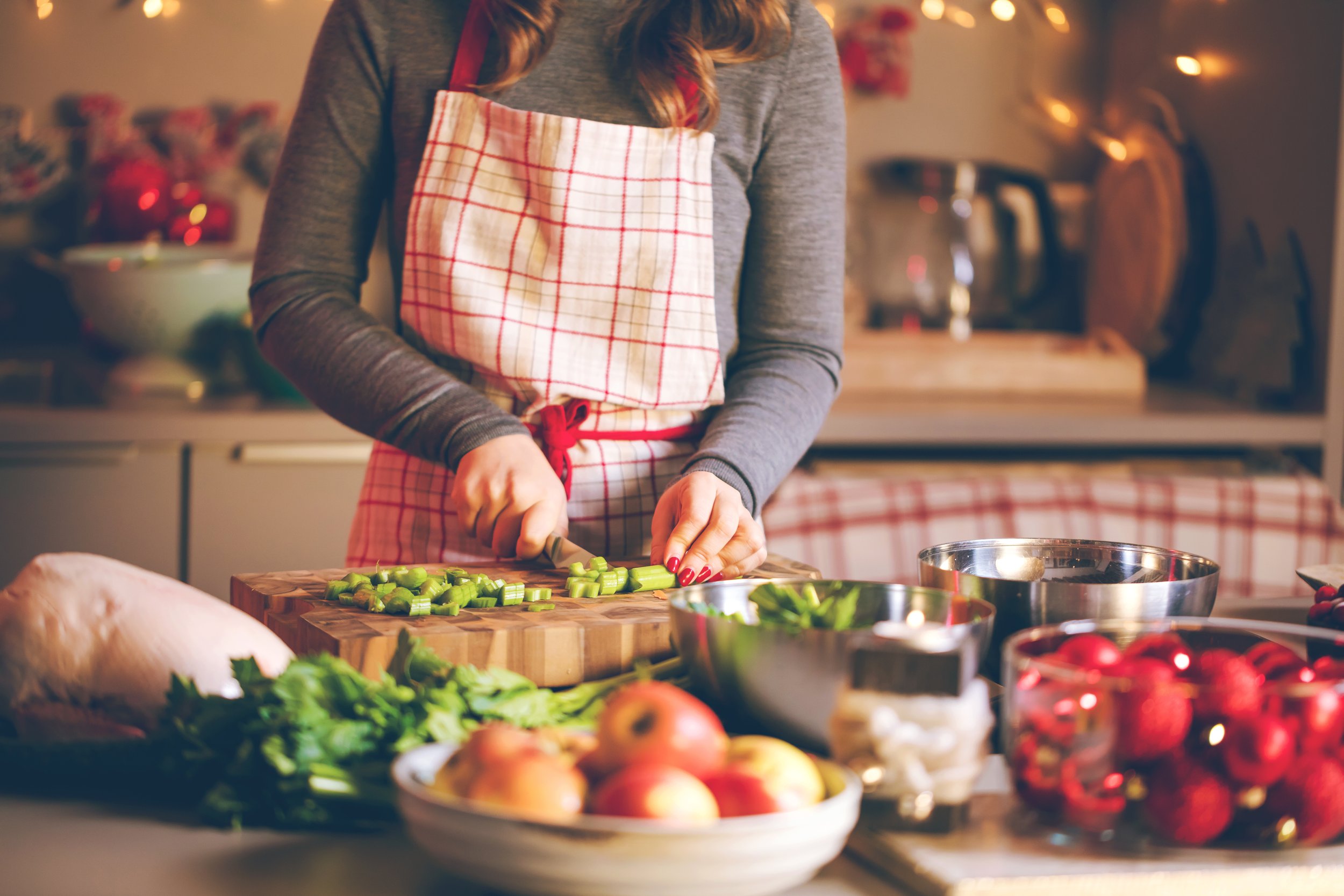
Thanksgiving is one of my favorite times of the year, but we all know that preparing a Thanksgiving meal can be a lot of work. Between chopping vegetables, lifting heavy pots, standing in the kitchen for hours, and trying to get everything on the table at the same time, it’s easy to overdo it.
If you have arthritis, particularly arthritis affecting your hands, wrists, knees, or feet, you may find that holiday preparations leave you with more pain than you anticipated.
If holiday cooking is something you enjoy, I don’t want you to give that up! Instead, let me share with you a few ways to make the experience easier on your joints, conserve your energy, and hopefully avoid unnecessary pain.
1. Make Your Kitchen Work for Your Hands
A lot of Thanksgiving preparation involves repetitive hand movements. Chopping, peeling, slicing, opening jars, and stirring can all become difficult when you have arthritis in your hands.
A few simple adjustments can make a big difference:
Buy pre-cut vegetables. There is absolutely nothing wrong with purchasing pre-cut onions, carrots, celery, or other vegetables. Repetitive chopping can aggravate painful hand joints, particularly when you’re doing it for extended periods.
Consider a vegetable chopper. There are plenty of inexpensive fruit and vegetable cutters available that can save you time and reduce repetitive cutting. Here is one to consider: https://a.co/d/0e5Zr0z7
Invest in arthritis-friendly kitchen tools. Knives with larger, ergonomic handles can be much easier to grip. Look for kitchen utensils designed to reduce the amount of pressure you need to apply with your hands. Here is one to consider: https://a.co/d/05SKEe5a
Use an electric jar opener. Opening jars and containers can be surprisingly difficult when you have hand arthritis. Small adaptive tools can make everyday kitchen tasks much easier.
The goal isn’t to avoid using your hands altogether. It’s to avoid unnecessary strain and repetitive movements that can leave you paying for it later.
2. Plan Ahead and Pace Yourself
If you know you’re hosting Thanksgiving, start preparing a few days ahead of time (you don’t have to accomplish everything in one day.) Purchase nonperishable ingredients early, prepare certain dishes in advance, and spread out your kitchen work.
A few other things to consider:
Sit whenever possible. You don’t have to stand at the kitchen counter for every task. Meal prep can often be done sitting at a table or kitchen island.
Use a cushioned kitchen mat. If you have arthritis in your knees, hips, or feet, a supportive anti-fatigue mat can make standing more comfortable. Here is one to consider: https://a.co/d/08K7ybaV
Avoid lifting heavy pots and pans. Ask someone else to move heavy cookware, drain large pots, or take dishes in and out of the oven.
Take breaks. You don’t have to finish everything in one sitting. Give your joints and muscles a chance to recover.
Delegate! If someone offers to help, let them. This is not the time to prove you can do everything yourself.
And remember, ordering some or even all of your Thanksgiving meal pre-prepared is perfectly acceptable (and dare I say the norm nowadays?!) You can still enjoy the holiday without spending the entire day in the kitchen.
3. Be Proactive About Pain Management
If you know that repetitive hand movements or prolonged standing typically aggravate your arthritis, think ahead.
For some people, taking an appropriate pain reliever before a particularly demanding activity can be helpful. Depending on your medical history and what your doctor recommends, this might include acetaminophen (Tylenol) or a nonsteroidal anti-inflammatory drug (NSAID).
The idea is to have a plan rather than waiting until your pain becomes difficult to manage.
Of course, not everyone can safely take these medications, particularly if you have kidney disease, gastrointestinal issues, cardiovascular disease, or take certain other medications. Discuss the best approach with your own doctor.
4. Remember What Thanksgiving Is Really About
My biggest advice this Thanksgiving is to give yourself permission to do things a little differently.
If you love cooking, keep cooking. Just make a few adjustments to protect your joints. If you enjoy hosting, ask family members to bring a dish. If you need to simplify the menu, simplify it!
And if that means going out to dinner instead of preparing an elaborate Thanksgiving meal at home? That’s perfectly fine, too!
The holidays should be about spending time with the people you love, not about how much you can accomplish in the kitchen.
A little planning, pacing, and asking for help can go a long way toward making this Thanksgiving more enjoyable.
Wishing you and your family a wonderful Thanksgiving!