


RF and Anti-CCP Antibodies Explained
2/2/26
Let me paint a familiar picture.
You’ve been dealing with joint pain, joint stiffness and/or swelling that just won’t quit. You’re more tired than usual, and it’s starting to affect your work and your day-to-day life. You know something’s off.
You see your primary care doctor. They listen, do an exam, and refer you to rheumatology. As part of that evaluation, a bunch of labs get ordered — and almost always on that list are rheumatoid factor (RF) and anti-cyclic citrullinated (anti-CCP) antibodies.
And then the results come back. Positive. Negative. Borderline. Confusing.
So let’s slow this down and talk through what these labs actually mean — and just as important, what they don’t mean.
First, an important thing I say all the time.
Rheumatology labs are important tools, and we cannot be without them. But they don’t do the thinking for us.
They only make sense when we interpret them in the clinical context — your symptoms, your exam, your story. Labs help to support the diagnosis of rheumatic illness.
What is rheumatoid factor (RF)?
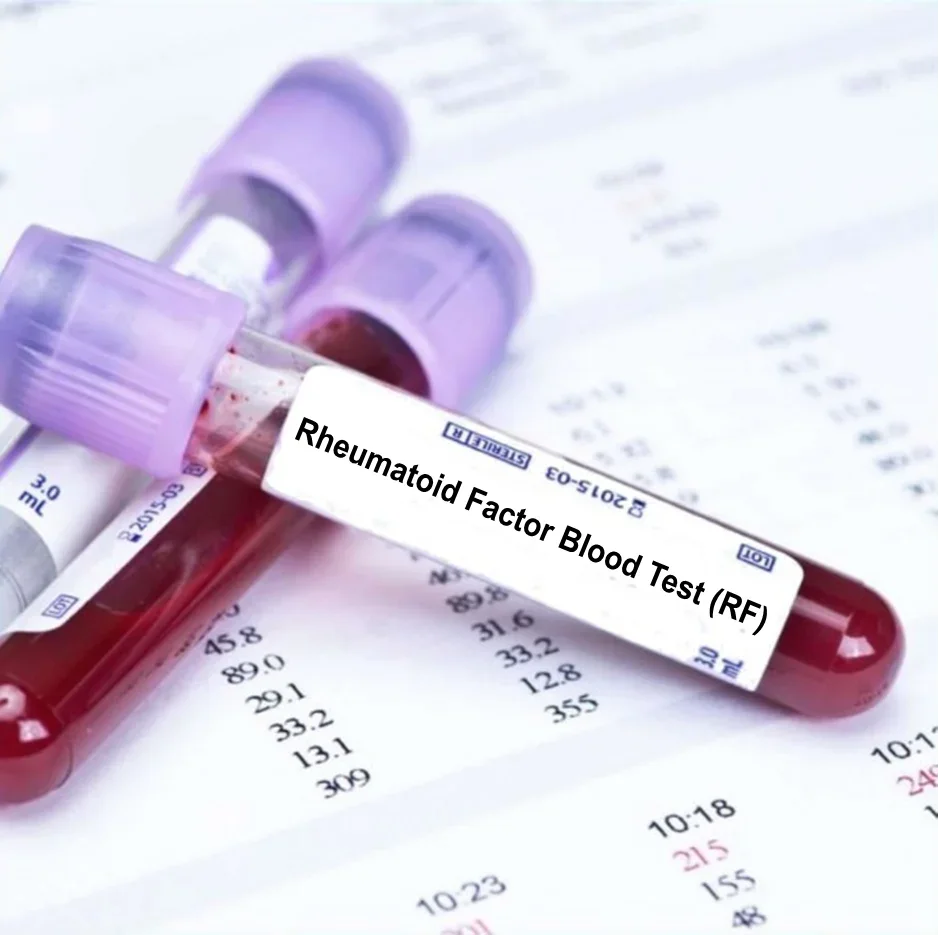
RF is an antibody that’s been around forever in rheumatology. RF is an autoantibody—most commonly an IgM antibody—that targets the Fc portion of IgG (in plain language: it’s an antibody that reacts against other antibodies).
It’s one of the most commonly ordered tests when someone has inflammatory joint symptoms.
But RF is not specific for rheumatoid arthritis (RA).
RF can be:
Mildly positive in older adults
Temporarily positive with infections
Positive in other autoimmune diseases (i.e., Sjogren’s, Lupus, Mixed Connective Tissue Disease, among many others)
Seen in even rarer conditions like vasculitis (i.e., hepatitis C–associated cryoglobulinemia)
On its own, a positive RF does not diagnose rheumatoid arthritis, and it does not mean you’re destined to develop it.
That said, in people who do have RA, RF positivity has been associated in some studies with more severe disease — which is one reason we take it seriously when it fits the bigger picture.
What are anti-cyclic citrullinated peptide (anti-CCP) antibodies?
Anti-CCP antibodies are autoantibodies directed against citrullinated proteins.
Here’s what that actually means, in plain language.
Citrullination is a normal process where the amino acid arginine is converted into citrulline. This happens during inflammation, cell stress, and tissue injury. In most people, the immune system ignores this process.
In some individuals, the immune system misidentifies citrullinated proteins as foreign and produces antibodies against them. Those antibodies are what we measure as anti-CCP antibodies.
Anti-CCP antibodies in rheumatology are highly specific for a diagnosis of RA. When anti-CCP is positive — and the symptoms fit — it’s very suggestive of RA.
Anti-CCP positivity is also associated with a higher risk of joint damage over time (what we call erosive disease). So while the number itself isn’t scary, it’s clinically meaningful.

Can you still have RA with normal diagnostic labs?
Yes. About 30% of people with RA have normal RF and anti-CCP antibodies. We call this “seronegative” RA.
In those cases, the diagnosis is clinically: convincing history, physical exam, imaging, +/- abnormal inflammatory markers. This is why listening to your symptoms matters so much.
Should RF and anti-CCP antibodies be rechecked over and over?
Usually, no. These are diagnostic labs, not monitoring labs. We don’t trend them the way we do sedimentation rate (ESR) or C-reactive protein (CRP). Once they’re checked, repeating them usually doesn’t change management.
There are exceptions, but for most people, rechecking doesn’t add much.
What does “seropositive” mean?
Seropositive means both RF and/or anti-CCP antibody positivity.
In a large retrospective study of 1,373 confirmed RA cases identified in the Mayo Clinic (Brooks et al Arthritis Care Res Jan 2026):
37% were dual seropositive (positive for both RF and anti-CCP antibodies,
13% seropositive for anti-CCP only
12% seropositive for RF only, and
38% seronegative (both the RF and anti-CCP antibodies are negative).
Historically, double-positive disease (both RF and anti-CCP antibody positivity) has been associated with more aggressive inflammation and a higher risk of joint damage or involvement of other organs. In this same study, the highest proportion of radiographic erosions (joint damage seen on x-rays due to disease) prior to or within one year of RA incidence was in the dual seropositive group (31%).
The good news? We have excellent treatments. Early and appropriate therapy makes a huge difference.
-
The findings in the study I referenced echo what I have seen in my career - 13% of patients with clinically confirmed RA were anti-CCP positive only.
Remember, a positive anti-CCP without symptoms of inflammatory arthritis does not diagnose RA.
-
Because RF isn’t specific, this is where a thoughtful rheumatology evaluation really matters.
Your symptoms might represent RA— or something else entirely. The lab alone can’t answer that. This is why a rheumatologist regularly studies your symptoms, as well as the labs.
-
The best thing to do is KNOW YOUR BODY, and accurately report your symptoms to your rheumatologist, even if they are mild. The more clearly you can describe what your body is doing, the better we can help.
Pay attention to:
Which specific joint(s) hurt
Whether stiffness is worse in the mornings
Swelling
Fatigue
Other persistent symptoms: rashes, shortness of breath, gastrointestinal issues, etc
-
A very high anti-CCP level is not scary — but it is very specific when the symptoms fit. In many cases, it actually helps us reach a diagnosis sooner.
For some people, RA may take months to diagnose, especially when exams and labs are subtle. A strong anti-CCP can shorten that process and get treatment started earlier — which is a good thing.
Key Takeaways
RF and anti-CCP antibodies are common labs, but they don’t diagnose disease on their own
About 30% of people with RA have normal diagnostic labs
Seropositivity can mean more aggressive disease — but RA is very treatable
Don’t dismiss ongoing joint pain, stiffness, swelling, or fatigue
Know your body and clearly report your symptoms, even if pain is mild
The earlier treatment is started, the better the health outcomes long term
Reference:
Brooks RT, Achenbach SJ, Kronzer VL, Myasoedova E, Crowson CS, Davis JM 3rd. Impact of Dual Rheumatoid Factor and Anti-Citrullinated Protein Antibody Seropositive, Single Seropositive, and Seronegative Rheumatoid Arthritis on Outcomes. Arthritis Care Res (Hoboken). 2026 Jan 20. doi: 10.1002/acr.80009. Epub ahead of print. PMID: 41556559.