Creatine: Not Just for Bodybuilders Anymore

When patients ask me about supplements, I usually start with a simple rule: often supplements do not have good clinical research behind them.
Creatine is one of the exceptions.
Creatine monohydrate is actually one of the most well-studied supplements available. For years it has been associated almost exclusively with athletes and bodybuilders trying to build muscle. But newer research suggests its benefits may extend beyond the gym.
Researchers are now exploring whether creatine may also support brain function and cognitive performance.
Creatine and Brain Health
Small studies have begun looking at creatine’s potential effects on the brain.
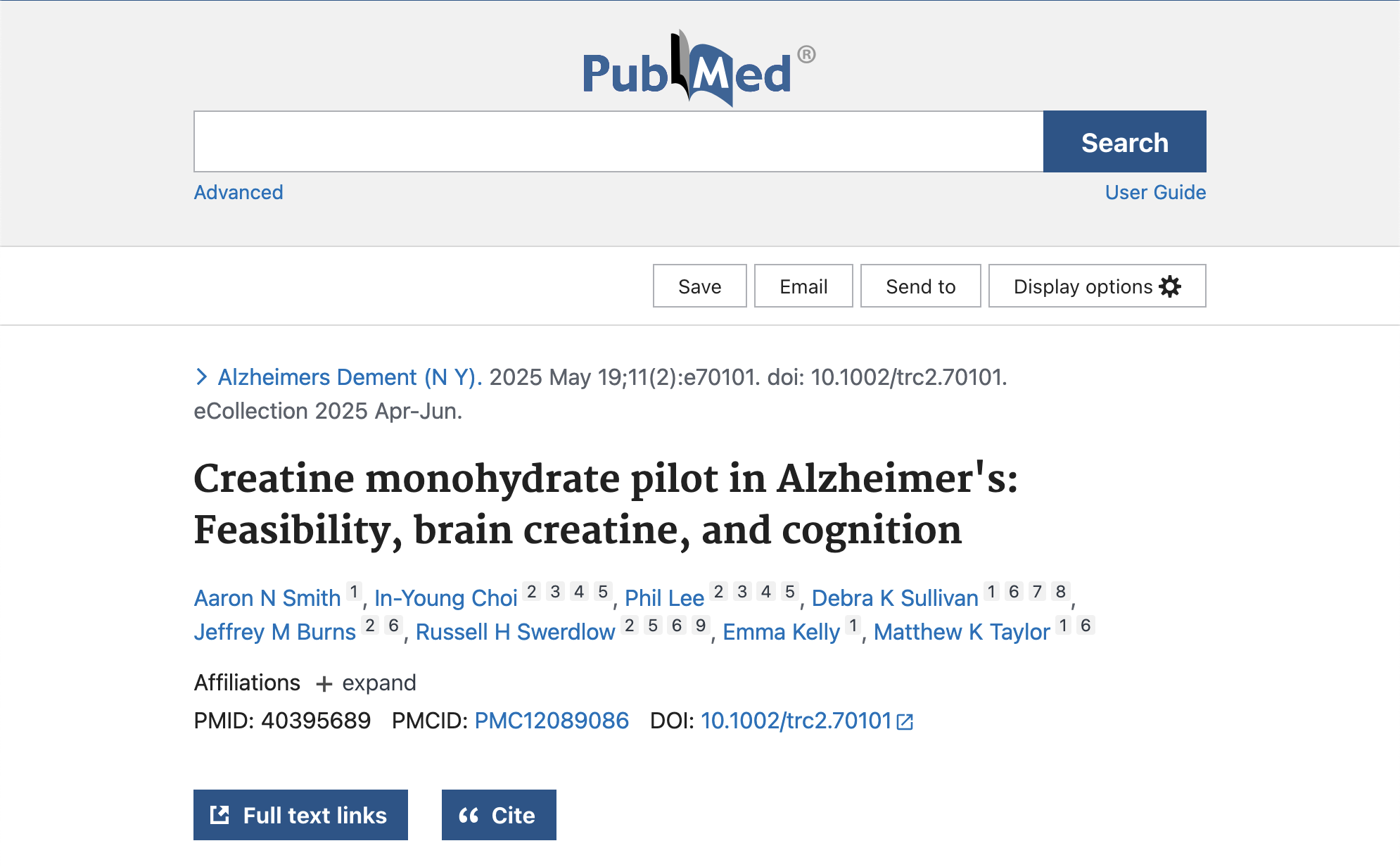
For example, a small pilot study involving 19 patients with Alzheimer’s disease suggested that creatine supplementation might help support cognitive function. Another small study in sleep-deprived individuals found improvements in brain performance after taking creatine.
These findings are interesting, but it’s important to interpret them cautiously.
Both studies were small, and the Alzheimer’s study did not include a control group. That means we cannot draw firm conclusions yet. Larger, well-designed trials are still needed before we know how meaningful these effects truly are.
Still, there is a biologically plausible reason researchers are interested in creatine for brain health.
Creatine is able to cross the blood–brain barrier, although not very efficiently. Once in the brain, it may help support cellular energy production.
What Exactly Is Creatine?
Creatine is a naturally occurring compound that your body already makes.
It is produced primarily in the liver, kidneys, and pancreas, and it can also be obtained through foods like:
Red meat
Fish
Because dietary intake is often relatively low, some people choose to supplement with creatine.
How Creatine Works
Creatine plays a key role in how our cells produce energy.
When you supplement with creatine, levels of phosphocreatine increase in your muscles and other tissues. Phosphocreatine helps regenerate ATP (adenosine triphosphate)—the primary energy currency of the body.
In simple terms, creatine helps your cells recycle energy more efficiently.
That is why athletes have used it for decades to improve performance and recovery.
For muscle benefits, most studies use doses around 2–5 grams per day.
Higher doses are sometimes discussed for cognitive support, but recommendations vary widely and the evidence is still evolving.
Is Creatine Safe?
Many people worry about the effects of creatine on kidney health.
Early concerns suggested that creatine supplementation might damage the kidneys, but multiple studies in healthy individuals have not supported this claim. In general, creatine appears to be safe for most people when used appropriately.
That said, anyone with kidney disease or other medical conditions should speak with their doctor before starting it, just as they would with any supplement.
Why I Personally Like Creatine
One of the biggest predictors of long-term health is muscle mass.
Muscle helps stabilize joints, supports metabolism, and plays an important role in healthy aging. Maintaining muscle becomes increasingly important as we get older.
Creatine can make it easier to preserve and build muscle, especially when combined with strength training.
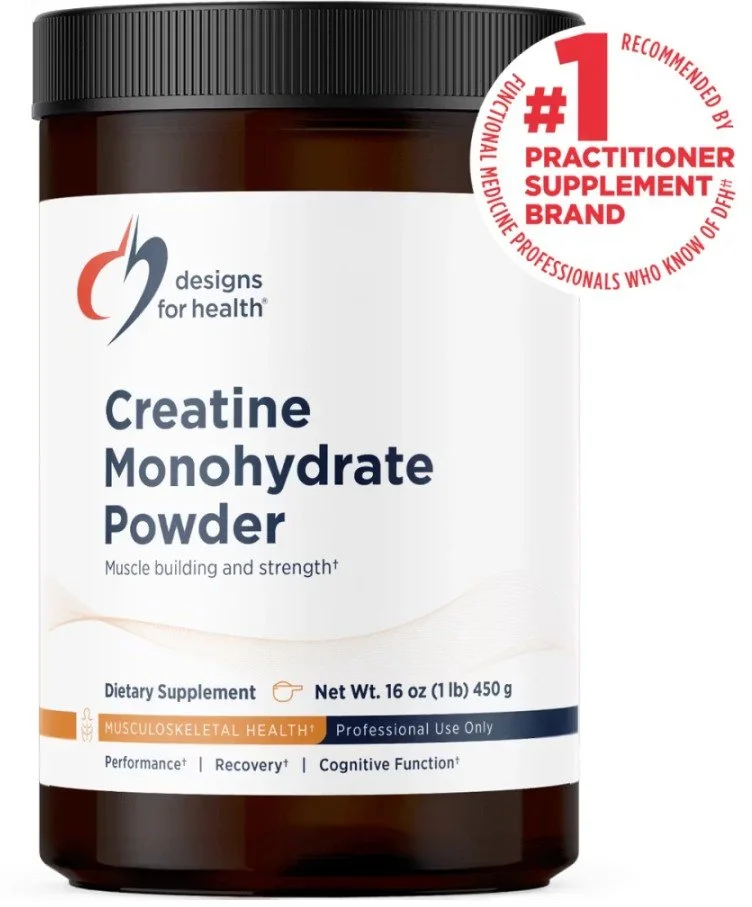
I personally started taking creatine a few months ago and have noticed improvements in my energy and muscle maintenance. I take the Designs for Health (professional grade) creatine supplement, one scoop daily, which provides 5 g of creatine monohydrate.
Some people find that higher doses can cause mild water retention, so they may prefer a lower dose—around 2 g daily (about half a scoop)—while still experiencing benefits.
There are countless supplements marketed today, but very few live up to the hype.
Creatine is one of the rare ones that actually has decades of research behind it—which is why it continues to attract interest not only in sports medicine, but now in brain health as well.