
Medicare GLP-1 Bridge Program: What You Need to Know About Weight-Loss Medications
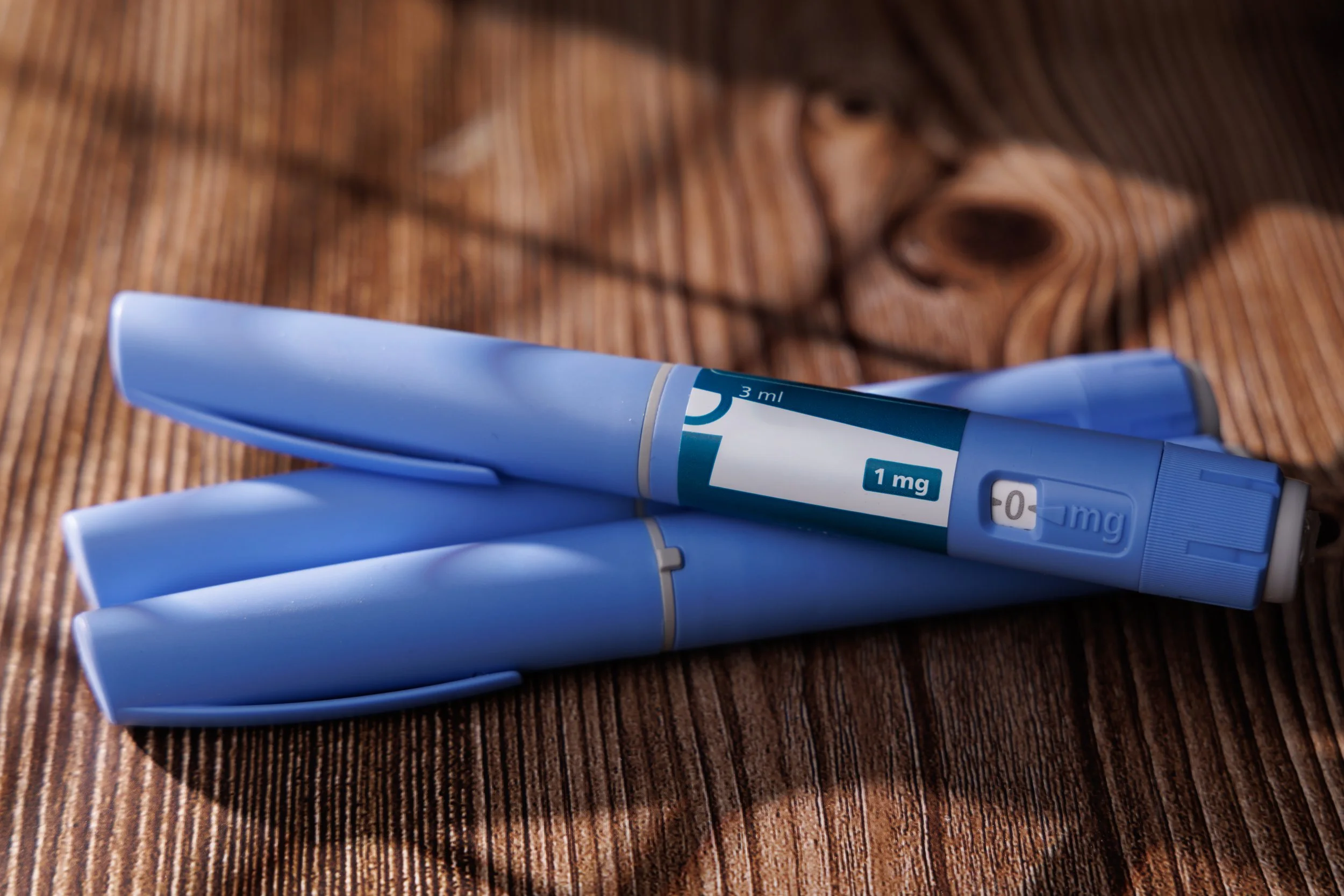
As a rheumatologist, I have become increasingly interested in GLP-1 medications and am excited to be prescribing them in my practice for appropriate patients.
Most people know GLP-1 medications for their effects on weight and blood sugar. But we are also learning that their potential benefits may extend beyond these areas. There is growing research, including convincing preclinical data, suggesting that GLP-1 medications may influence inflammatory pathways as well.
This is particularly interesting in rheumatology. Many of my patients live with chronic inflammatory diseases such as rheumatoid arthritis, psoriatic arthritis, and lupus. Our primary goal is always to control the underlying autoimmune disease and, whenever possible, achieve minimal disease activity or remission. But managing these conditions involves more than disease activity alone.
Even when autoimmune disease is mostly controlled, patients may also be dealing with excess weight, prediabetes, insulin resistance, hypertension, or increased cardiovascular risk. For some patients, a GLP-1 may be another tool to address these issues while we continue their established rheumatologic treatment.
GLP-1 medications are not a replacement for biologics, DMARDs, or other established treatments for autoimmune disease. The clinical evidence for using GLP-1 medications specifically to treat autoimmune disease is still evolving. However, their potential effects on inflammatory pathways, along with the cardiovascular benefits demonstrated by some GLP-1 medications, are areas of growing interest.
The biggest challenge we often encounter is access. That is why I wanted to discuss the Medicare GLP-1 Bridge Program.
What is the Medicare GLP-1 Bridge?
The Medicare GLP-1 Bridge is a temporary CMS demonstration program running from July 1, 2026 through December 31, 2027.
It provides eligible Medicare beneficiaries access to certain GLP-1 medications at a $50 monthly copay when they are prescribed specifically for weight management.
The program operates outside the normal Medicare Part D payment system, so the $50 copay does not count toward your Part D deductible or out-of-pocket spending.
Is the Bridge for diabetes or weight management?
The Bridge is specifically for weight management. It is not the program for treating type 2 diabetes.
If you have type 2 diabetes, Medicare Part D may cover certain GLP-1 medications for diabetes, and you should pursue coverage through your Part D plan rather than the Bridge.
Prediabetes is different. Prediabetes can help someone qualify for the Bridge when their BMI is at least 27.
Do I need Medicare Part D to enroll in the Bridge program?
Yes. You must have eligible Medicare prescription drug coverage, such as a standalone Medicare Part D plan or a Medicare Advantage plan that includes prescription drug coverage (MA-PD).
Having Medicare Parts A and B alone is not enough.
Although Part D enrollment is required for eligibility, the Bridge medication itself is not paid through your normal Part D benefit.
How much does the medication cost?
For someone who meets the program requirements, the copay is $50 for a monthly supply.
Medical visits, laboratory testing, nutrition counseling, and other aspects of weight-management care may have separate costs.
Which medications are included?
As of October 2026, the medications included in the Bridge for weight management are:
Zepbound® (tirzepatide) — KwikPen only
Wegovy® (semaglutide) — injection and tablet formulations
Foundayo® (orforglipron) — tablet
The medications and eligible formulations can change, so check the current CMS information.
One practical detail: Zepbound single-dose pens and vials are not included in the Bridge. The eligible formulation is the KwikPen.
What are the qualifying criteria?
The Bridge has specific BMI requirements:
35 or higher - No additional medical condition is required
30 or higher - At least one of: heart failure with preserved ejection fraction (HFpEF), uncontrolled high blood pressure, or chronic kidney disease (stage 3a or higher)
27 or higher - At least one of: prediabetes, previous heart attack, previous stroke, or symptomatic peripheral artery disease
These are Medicare Bridge criteria and are not necessarily identical to the FDA prescribing criteria for each medication.
If my BMI is 27 and I have prediabetes, could I qualify?
Yes, potentially.
For example:
BMI 28 + prediabetes = potentially eligible
BMI 28 without a qualifying medical condition = does not meet the Bridge's BMI criteria.
And remember, prediabetes is not the same as type 2 diabetes for purposes of this program.
What if I have rheumatoid arthritis, psoriatic arthritis, or lupus?
Having an autoimmune disease by itself does not qualify you for the Medicare GLP-1 Bridge. However, a GLP-1 may be worth discussing if you also meet the program's weight-management criteria.
This is an area where I see an important potential role for GLP-1 medications in rheumatology.
For example, a patient with psoriatic arthritis may be on an appropriate, robust medication regimen and be doing relatively well overall, but still have mild to moderate disease activity. If that patient also has obesity, prediabetes, or other qualifying metabolic or cardiovascular risk factors, we may consider adding a GLP-1 rather than completely changing a rheumatologic treatment regimen that is otherwise working.
The goal is to address excess weight and metabolic risk while continuing established autoimmune treatment. For some patients, improving weight and metabolic health may also help us move closer to minimal disease activity.
The same approach may apply to someone with rheumatoid arthritis or lupus whose inflammatory disease is mostly controlled but who also has excess weight, prediabetes, hypertension, or increased cardiovascular risk.
I do not view a GLP-1 as a replacement for a biologic, DMARD, or other established autoimmune treatment. Rather, it can be an additional tool when addressing weight and metabolic health may help us get the patient even closer to their overall health goals.
The emerging research into the effects of GLP-1 medications on inflammatory pathways is particularly interesting to me as a rheumatologist. The preclinical data are promising, but we still need more clinical research before GLP-1 medications can be considered established treatments for autoimmune diseases.
Does sleep apnea qualify me for the Bridge?
Moderate-to-severe obstructive sleep apnea is a Medicare Part D-covered indication for certain GLP-1 treatment. Therefore, someone with this diagnosis is not eligible for the Bridge, even if they otherwise meet the Bridge's BMI criteria.
In that situation, the appropriate pathway may be through the person's Part D plan.
What if my Part D plan doesn't cover weight-loss medications?
This is one of the situations the Bridge is designed to address.
If you have eligible Medicare Part D coverage, meet the Bridge's clinical criteria, and the medication is being prescribed specifically for weight management, you may be able to obtain an eligible GLP-1 through the Bridge for $50 per month.
There are additional eligibility rules, including restrictions related to previously receiving a GLP-1 through Medicare Part D.
What if I already received a GLP-1 through Medicare Part D?
CMS states that for 2026, someone who has received a GLP-1 through their Part D plan during calendar year 2026 is not eligible for the Bridge in 2026.
Because these rules may change for 2027, check the current CMS requirements rather than assuming the rules will remain the same.
How do I get started?
Your healthcare provider prescribes an eligible medication and submits the required prior authorization confirming that you meet the program's criteria. The pharmacy then processes the prescription through the Medicare GLP-1 Bridge.
It is helpful to have your Medicare Part D information, current height and weight, BMI, medication list, relevant medical history, and previous GLP-1 treatment information available.
Where can I check the official requirements?
Because this is a new program and the details can change, I recommend checking the official Medicare information:
Medicare GLP-1 Bridge:
CMS Medicare GLP-1 Bridge
Medicare patient information:
Medicare — Weight Loss Drugs
You can also call 1-800-MEDICARE (1-800-633-4227).
The bottom line
As a rheumatologist, I am excited about the potential role of GLP-1 medications in helping us think more broadly about the health of our patients.
For someone living with rheumatoid arthritis, psoriatic arthritis, lupus, or another chronic inflammatory disease, controlling autoimmune inflammation remains a central goal. But we also need to consider excess weight, metabolic health, and cardiovascular risk.
The emerging science around GLP-1 medications and inflammatory pathways is particularly interesting. While the preclinical data are promising, more clinical research is needed to understand how these effects may translate to patients with autoimmune disease.
For now, I view GLP-1 medications as an additional tool for carefully selected patients, particularly when weight management, metabolic health, and cardiovascular risk are important parts of the overall picture.
For eligible Medicare beneficiaries, the GLP-1 Bridge may provide a new pathway to obtain certain weight-management medications for $50 per month.
If you are wondering whether a GLP-1 medication may be appropriate for you, I recommend discussing your individual medical history, goals, and treatment options with your physician.
Medicare GLP-1 Bridge requirements are current as of October 2026 and may change. Eligibility is ultimately determined according to CMS requirements and the program's prior authorization process.